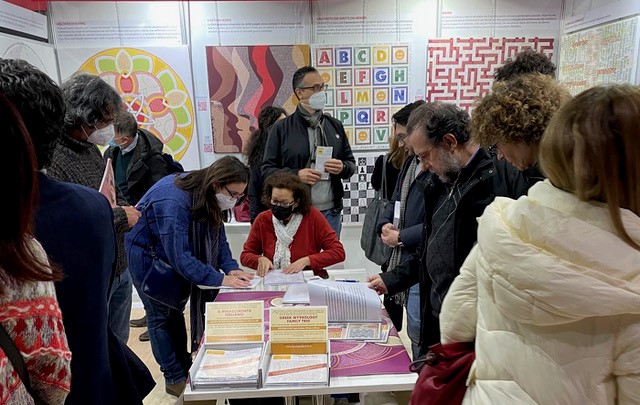
Paesaggi di Parole carefully and precisely creates thematic, temporal, mental, and conceptual maps, moving between an educational and informative vocation and a graphic research aimed at effectively presenting a subject.

The works of Paesaggi di Parole translate cognitive maps—that is, the images our minds collect and use to store knowledge—into a new visual, artistic, and physical language. They fix mental images onto panels made of cotton or other printable materials.
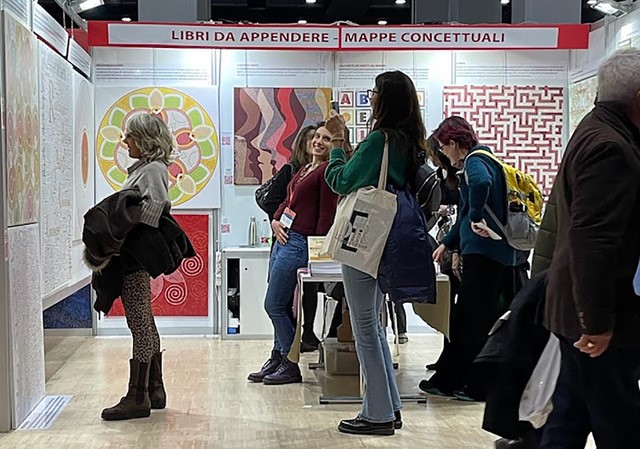
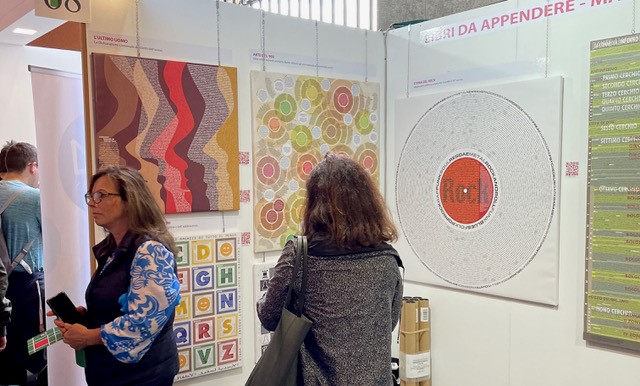
The emergence of the first graphic software, starting in the second half of the 1990s, made texts and spatial figures fluid and malleable. It was this new artistic opportunity that inspired the works of Paesaggi di Parole.

A cognitive map is a model that each of us uses—consciously or unconsciously—to acquire, encode, memorize, and store information and knowledge.

There are common and widely used cognitive maps, such as chronological ones, which are easy to understand. Others, however, are more personal and require study or in-depth explanations to uncover their interpretative key.

Our maps are created with the contribution of various professionals: graphic designers, lettering experts, executors, proofreaders, and above all authors—most often scholars or qualified teachers.