
HISTORY OF FASCISM

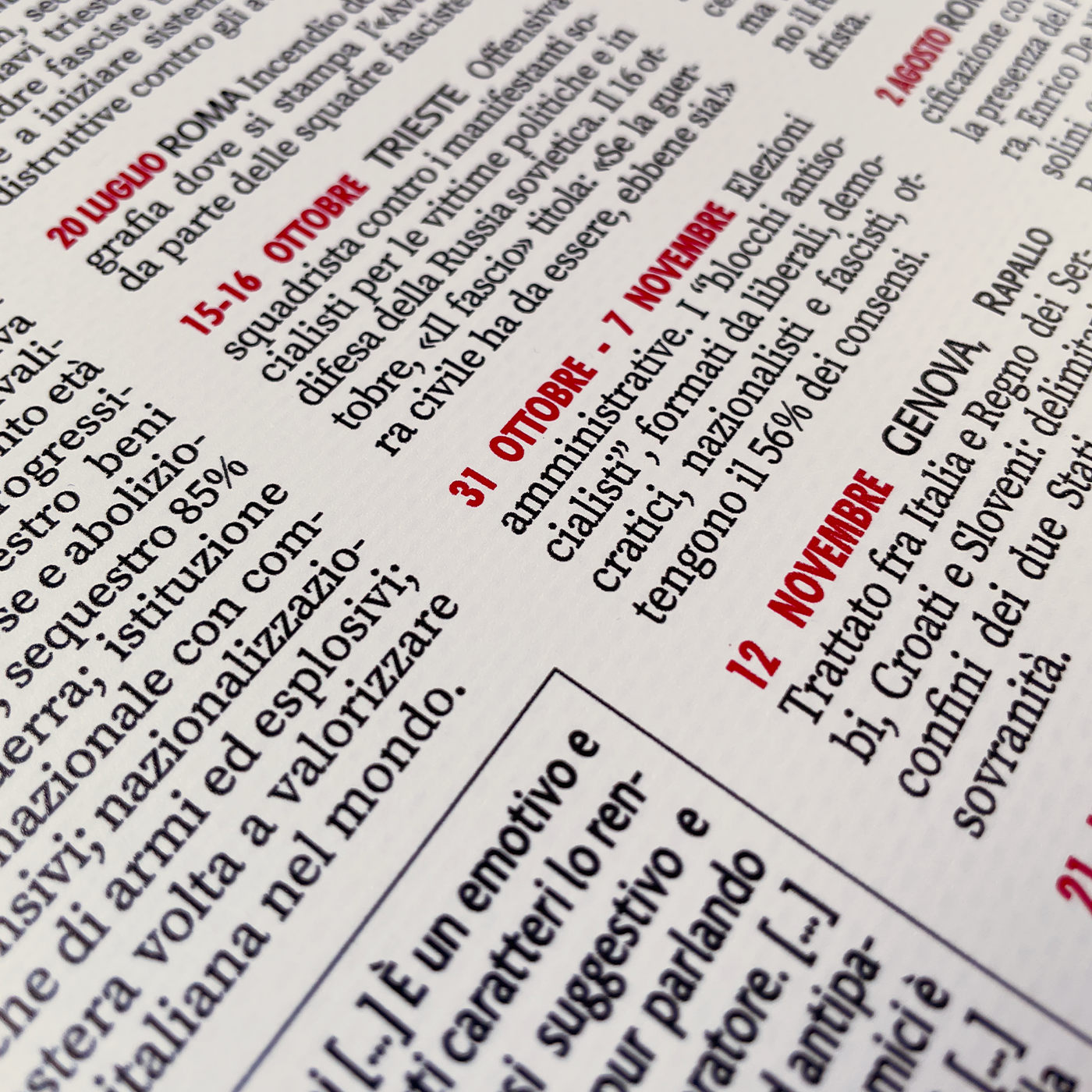
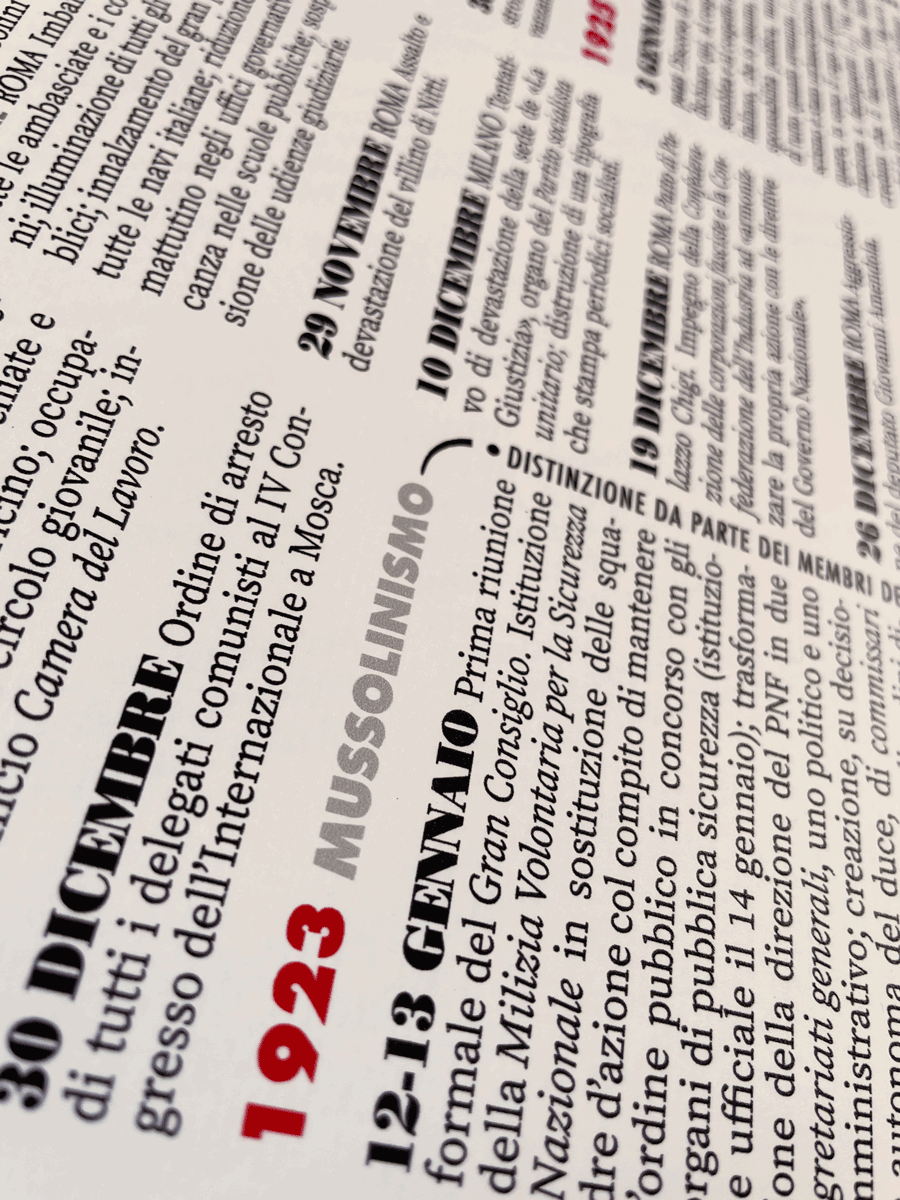
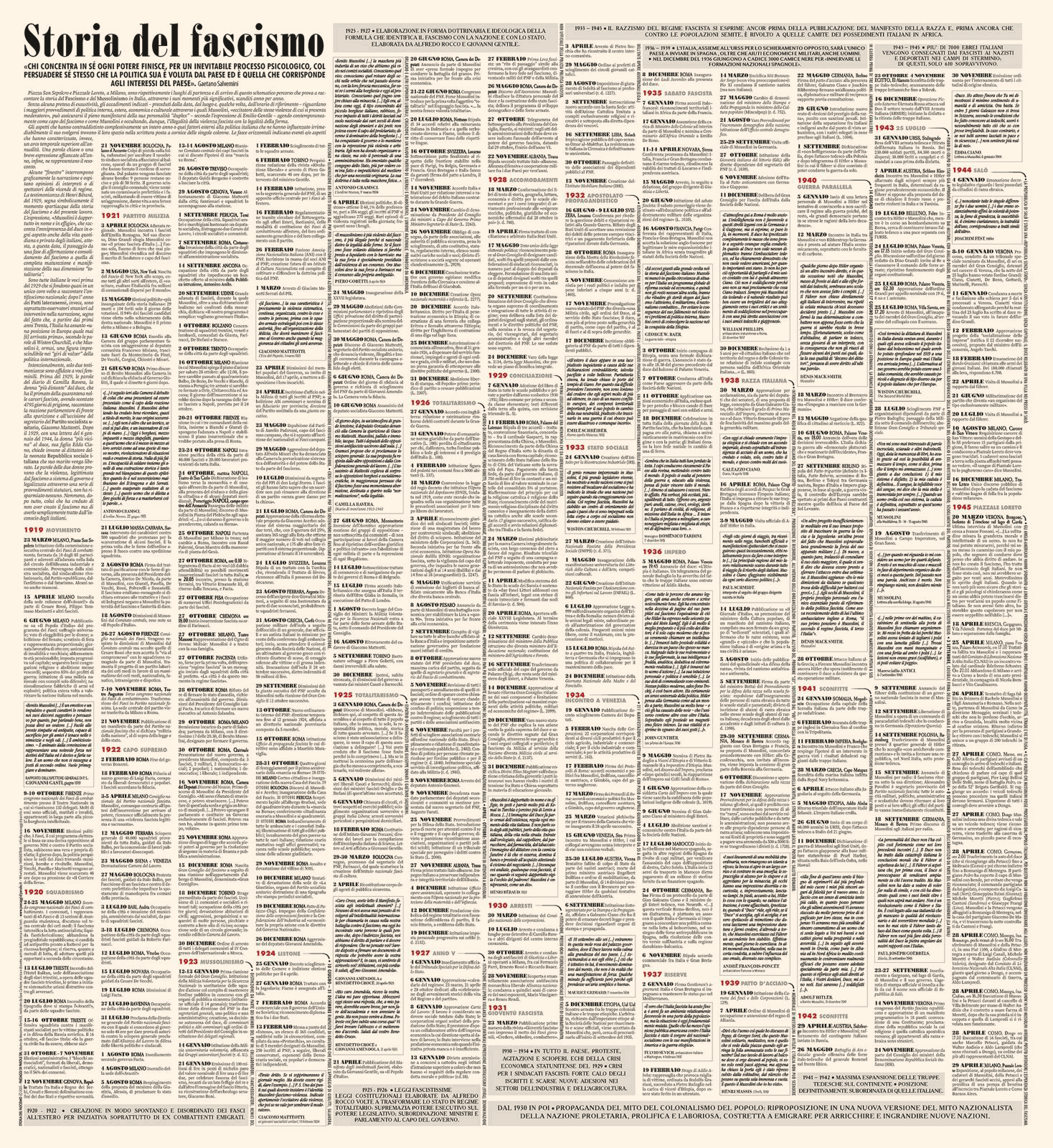
Piazza San Sepolcro (1919) and Piazzale Loreto (1945), both in Milan, respectively mark the starting and ending points of this schematic journey that attempts to recount the history of Fascism through hundreds of dates tracing its most significant moments, from its birth to its downfall.

Without any claim to completeness, the events listed—preceded by date, place, and sometimes time—concern the major measures of the Fascist regime’s domestic, foreign, economic, and cultural policies. The map deliberately contains no commentary or analysis, which are left entirely to the reader.

DATA SHEET

"HISTORY OF FASCISM"
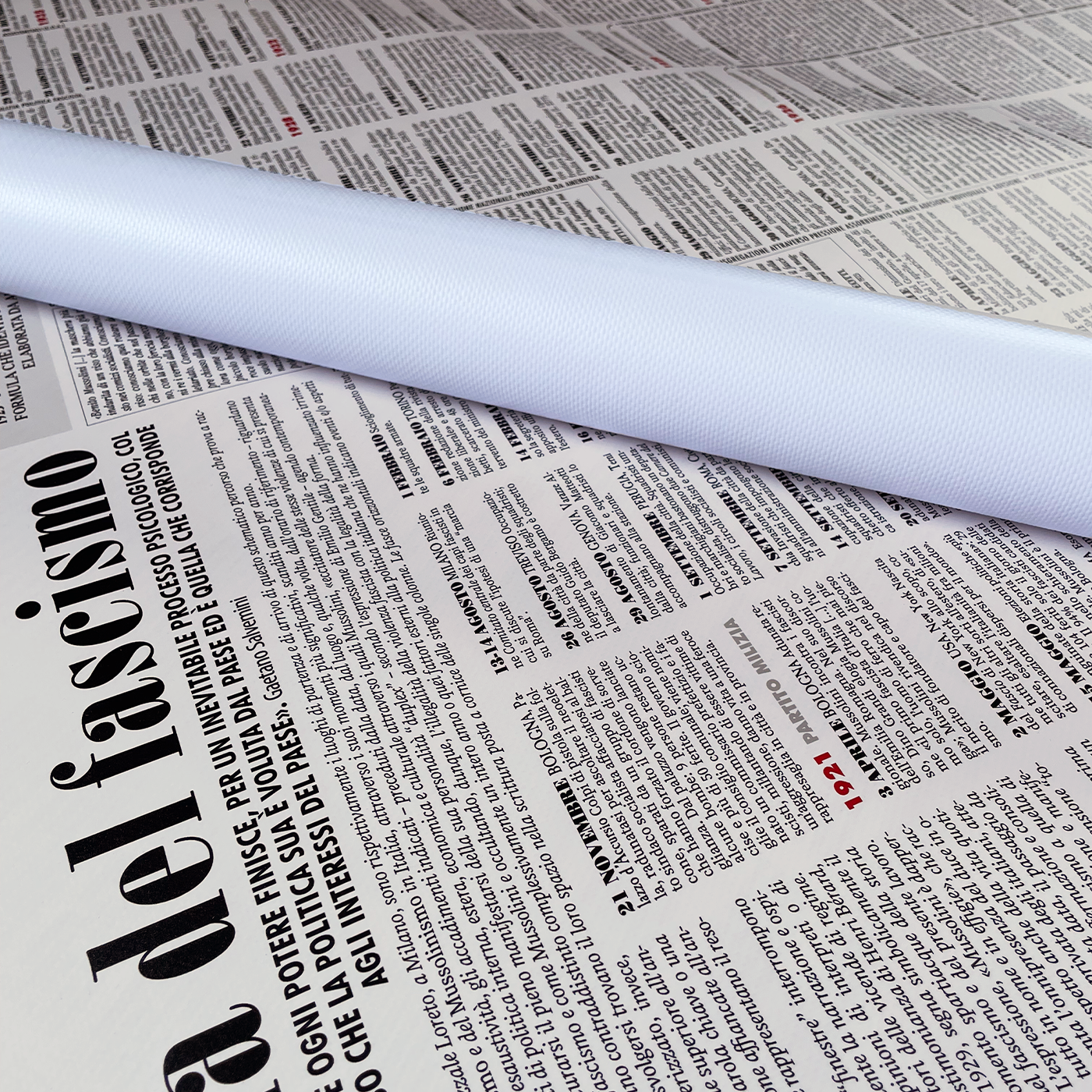
While keeping the content unchanged, this map is available in three different graphic versions:
100 × 109 cm
(previous map)
122 × 90 cm

200 × 55 cm
(subsequent map)

AUTHOR: Sara Carbone, historian and lecturer in Salerno.

MADE IN COTTON OR PVC

"HISTORY OF FASCISM" features extra margins on all four sides to allow for easy and proper stretching.
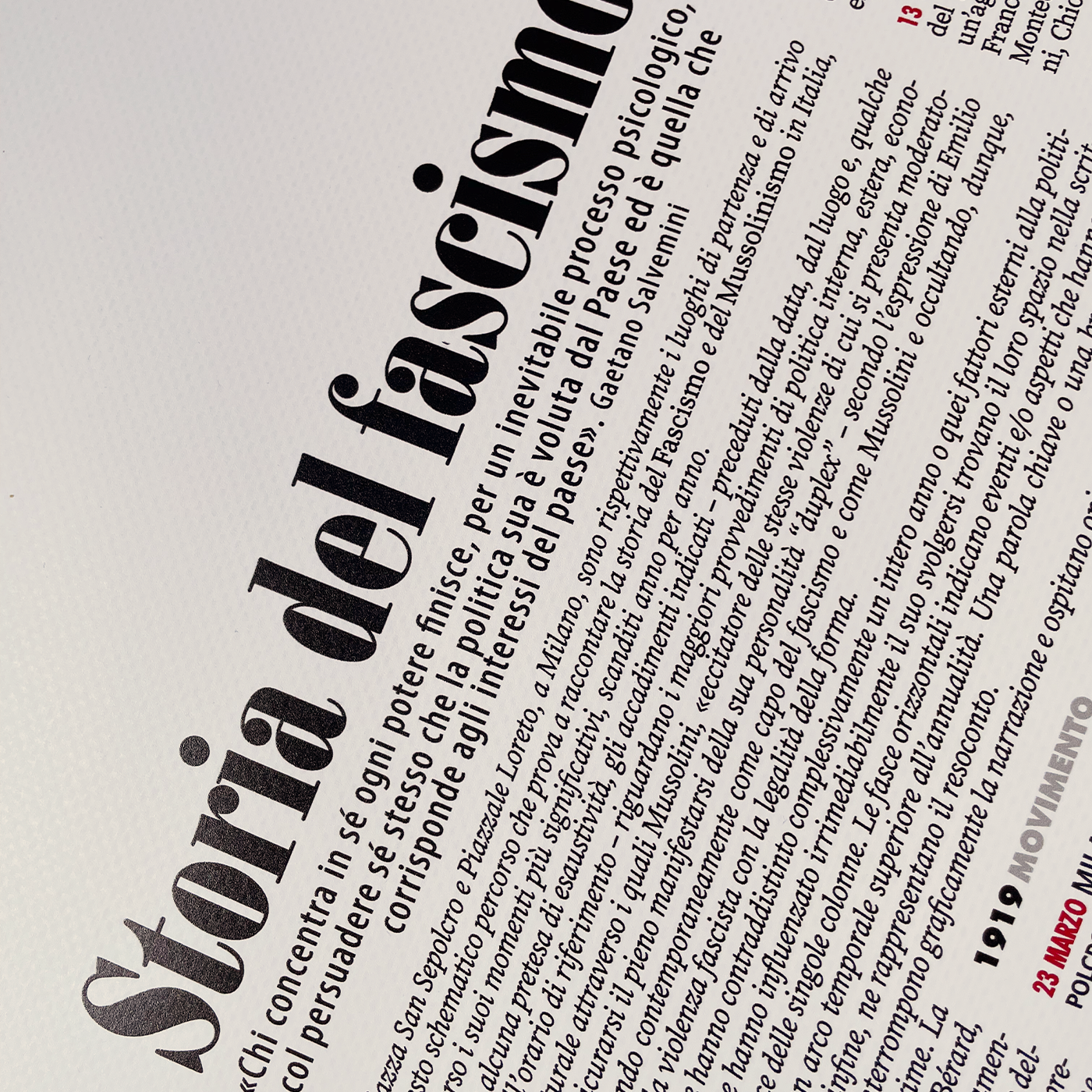
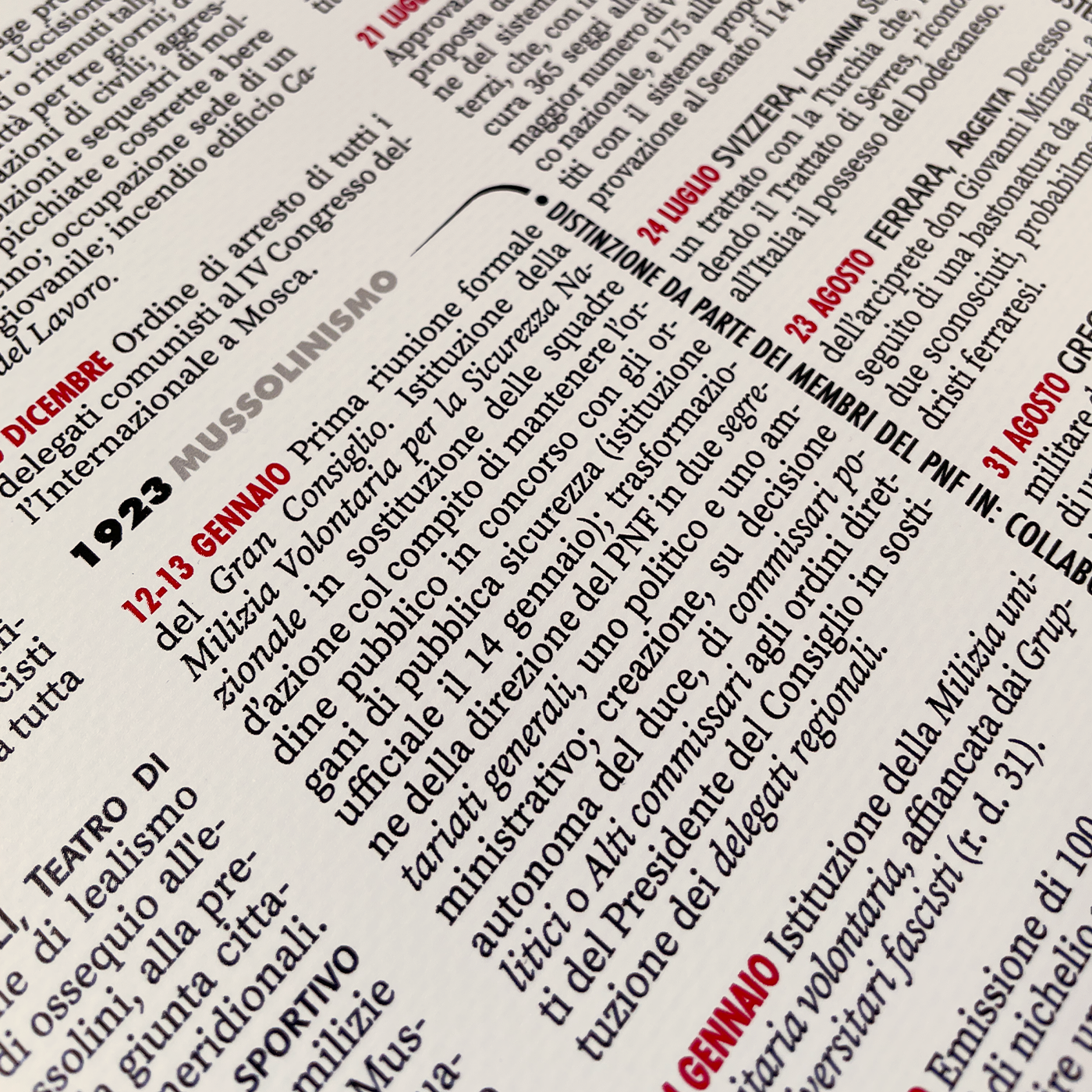
Several “windows” visually interrupt the narrative and host the opinions of witnesses, interpreters, or observers of the regime’s events. Henri Bérard’s testimony from 1929 symbolically marks the watershed moment in both the history of Fascism and this work. His statement—«Mussolini is everywhere, in name and likeness»—describes the omnipresence of the Duce in every aspect of Italians’ daily and private lives, attesting that by this date Fascism had moved from a phase of affirmation and consolidation to one of full maturity and manifestation of its “totalitarian” dimension.

«Those who concentrate all power in their own hands inevitably end up persuading themselves that their policy is willed by the country and corresponds to the nation’s interests.»

Gaetano Salvemini

Before 1929, all the testimonies are Italian and merge almost into a single chorus narrating national anti-Fascism. After 1929, however, foreign observers increasingly intervene in the narrative, reflecting the fact that from the early 1930s Italy had assumed «a position in Europe it had never reached before», in Winston Churchill’s words, and that Mussolini had by then become an unavoidable figure in the “waltzes” of international politics.