EURO

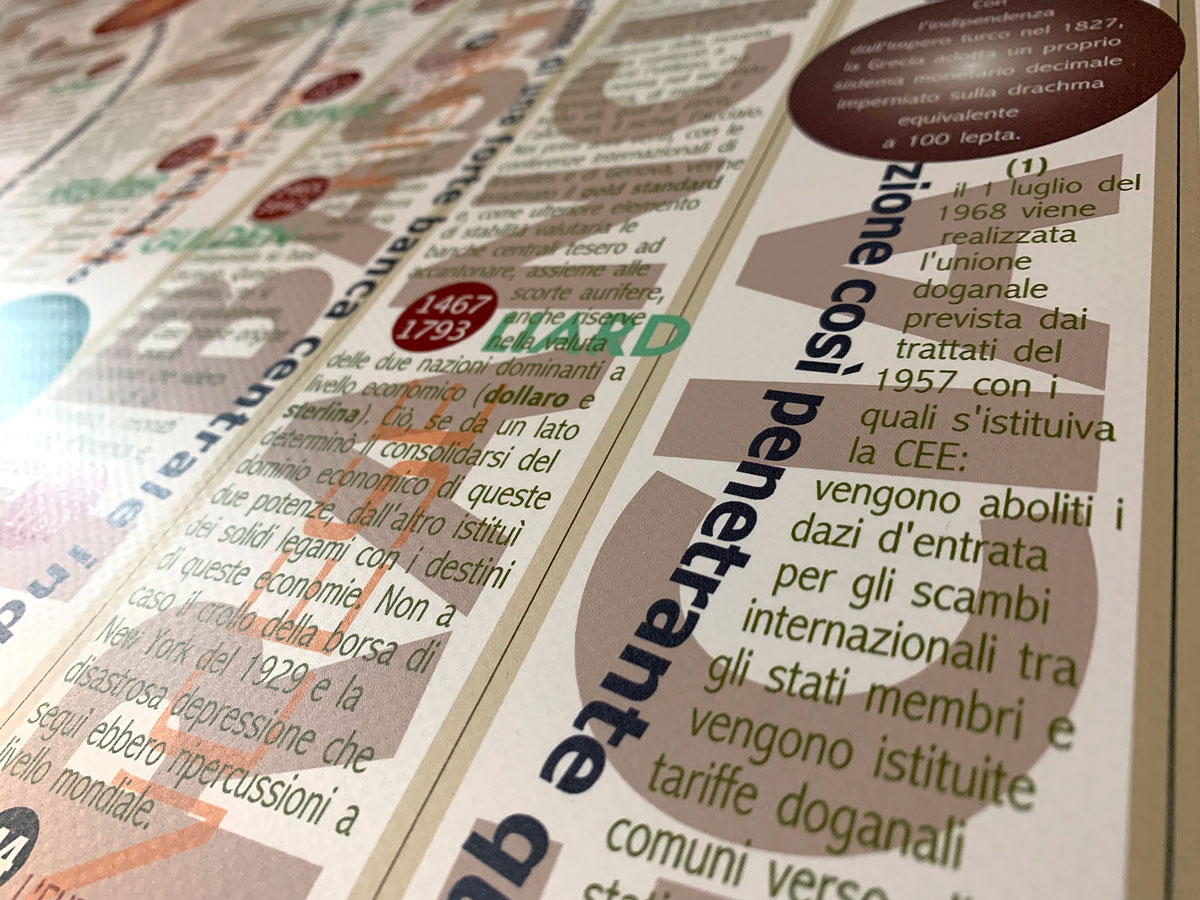
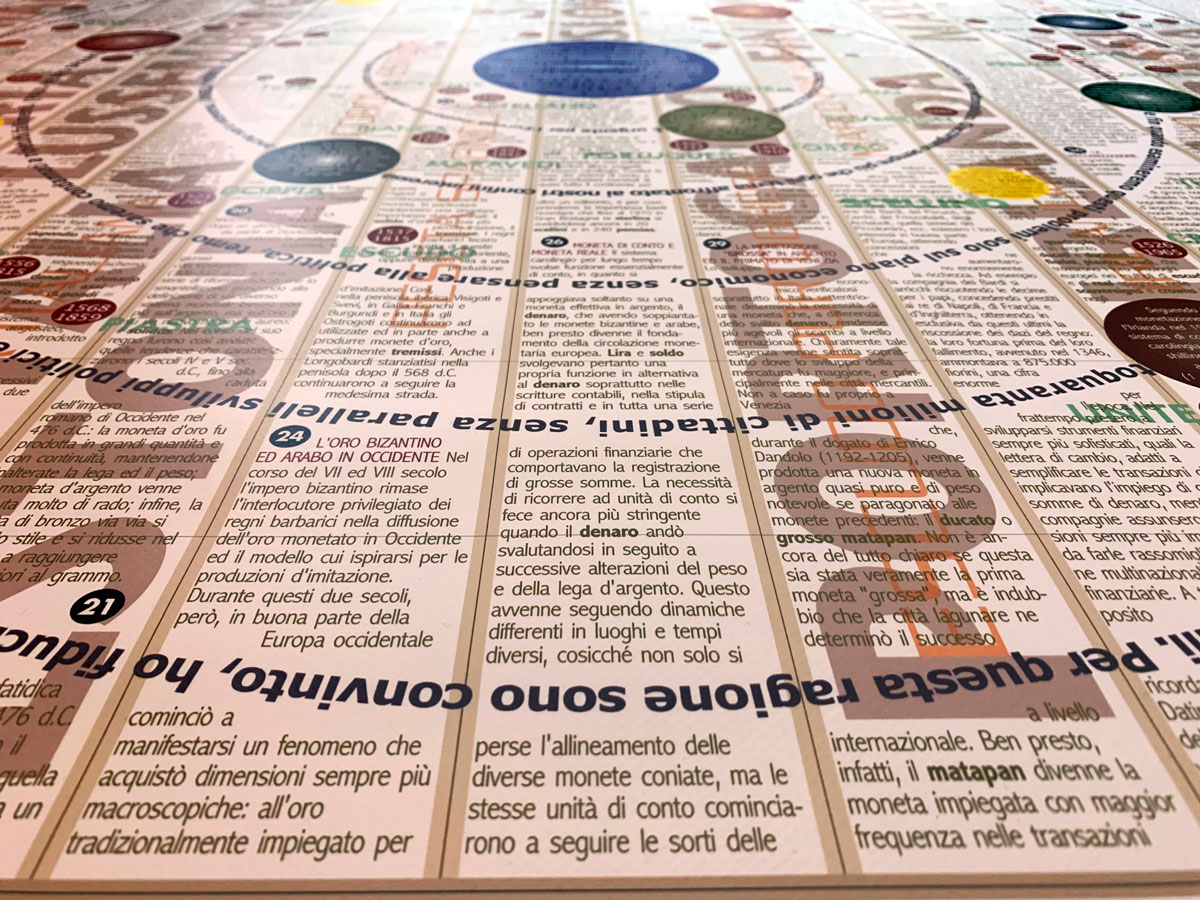
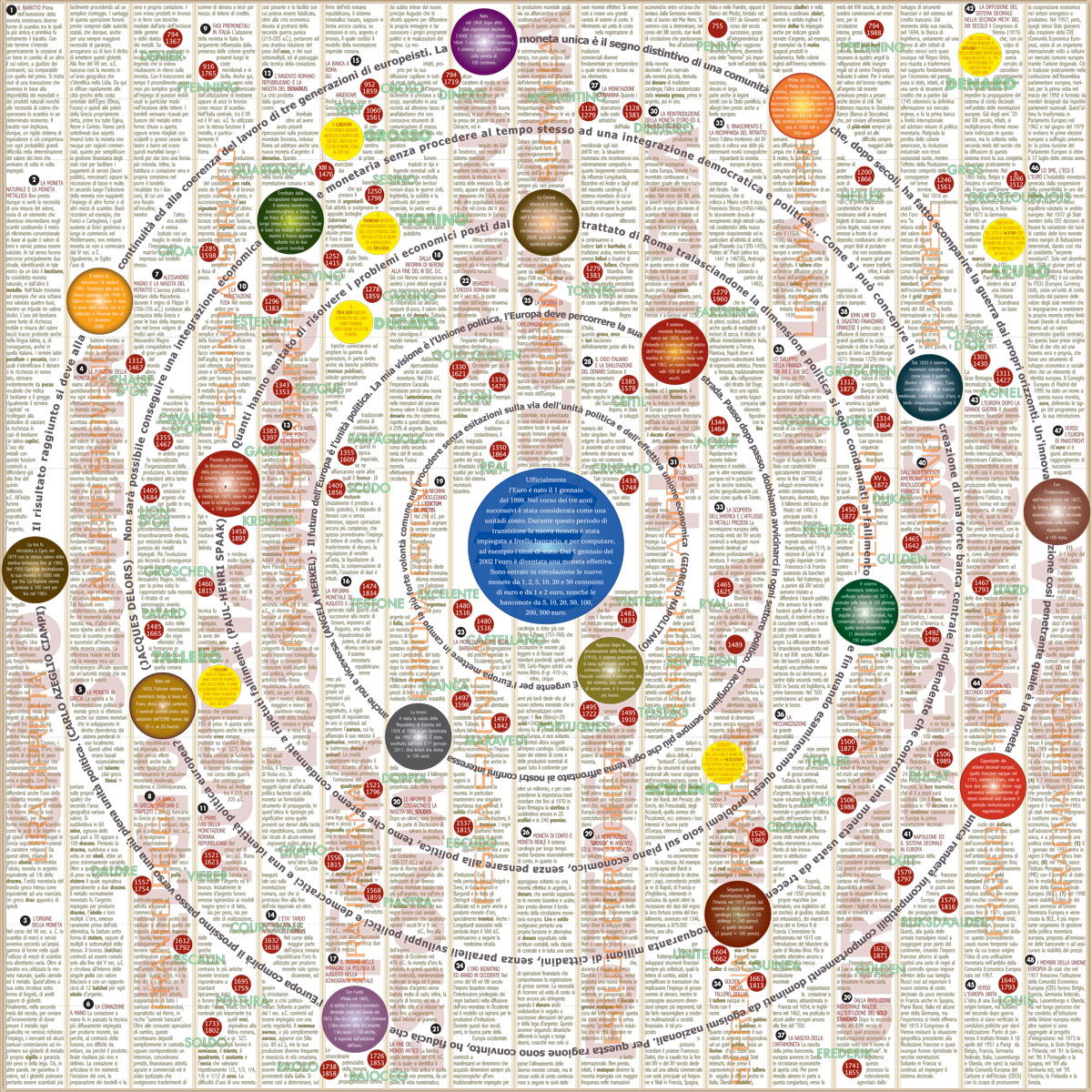
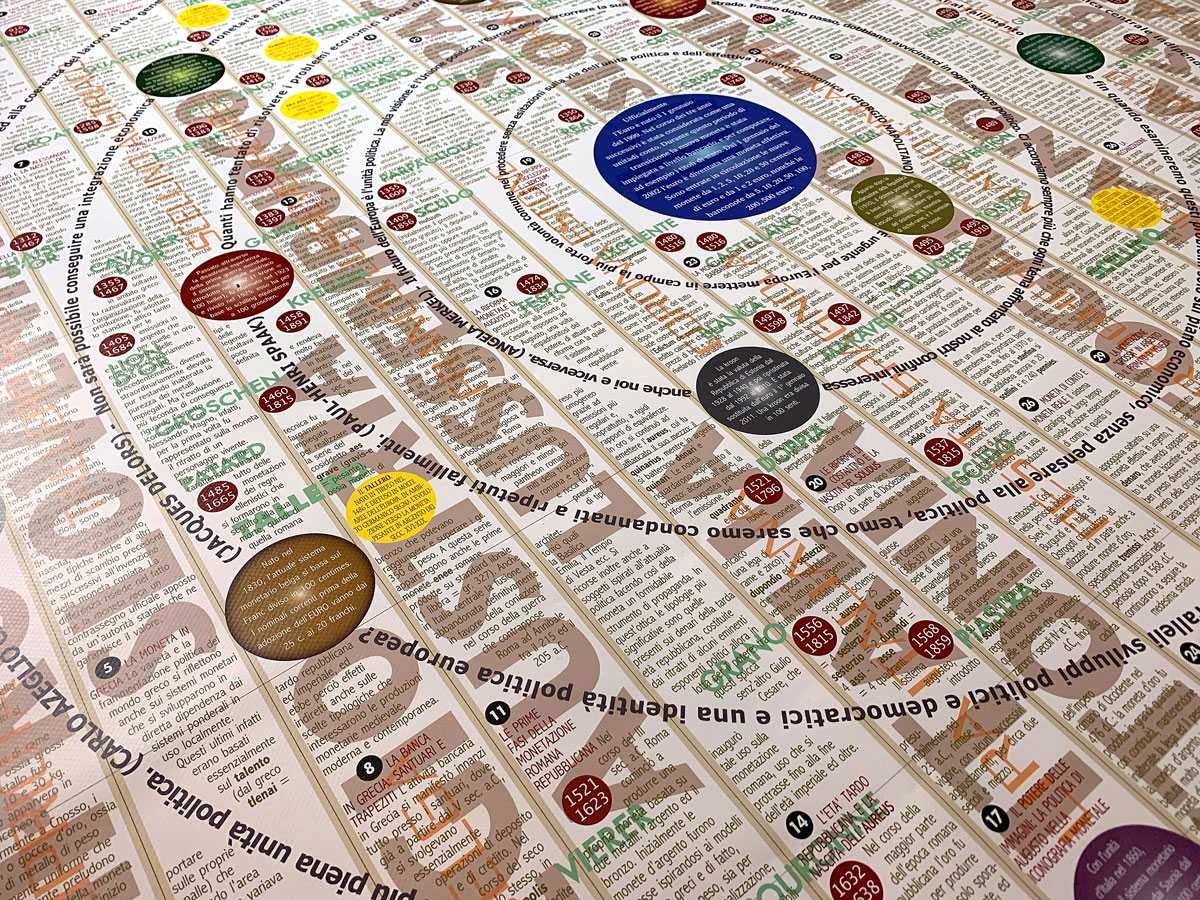
History of European currencies from ancient times to the Euro. The map shows that there were other attempts, or rather, temptations, to introduce a single currency during the European history, when trade was most intense, The map presents all the currencies of the Countries that adopted the Euro up to 2011, the year of publication of this work. Twenty of the twenty-seven member states of the European Union adopted the Euro as their sole currency at different times: Austria, Belgium, Finland, France, Germany, Ireland, Italy, Luxembourg, the Netherlands, Portugal, Spain (1999), Greece (2001), Slovenia (2007), Cyprus, Malta (2008), Slovakia (2009), Estonia (2011), Latvia (2014), and Lithuania (2015).
AVAILABLE IN ITALIAN LANGUAGE

« This result is due to continuity and consistency in the work of three generations of pro-Europeans. The singe currency is the distinctive mark of a community that, after centuries, has made war disappear from its horizons. Such an incisive innovation as the single currency will make the dominant behaviour of national egoism incompatible. This is why I am convinced that Europe will take the next step towards a full political union. »

Carlo Azeglio Ciampi | economist, 10th President of the Republic of Italy

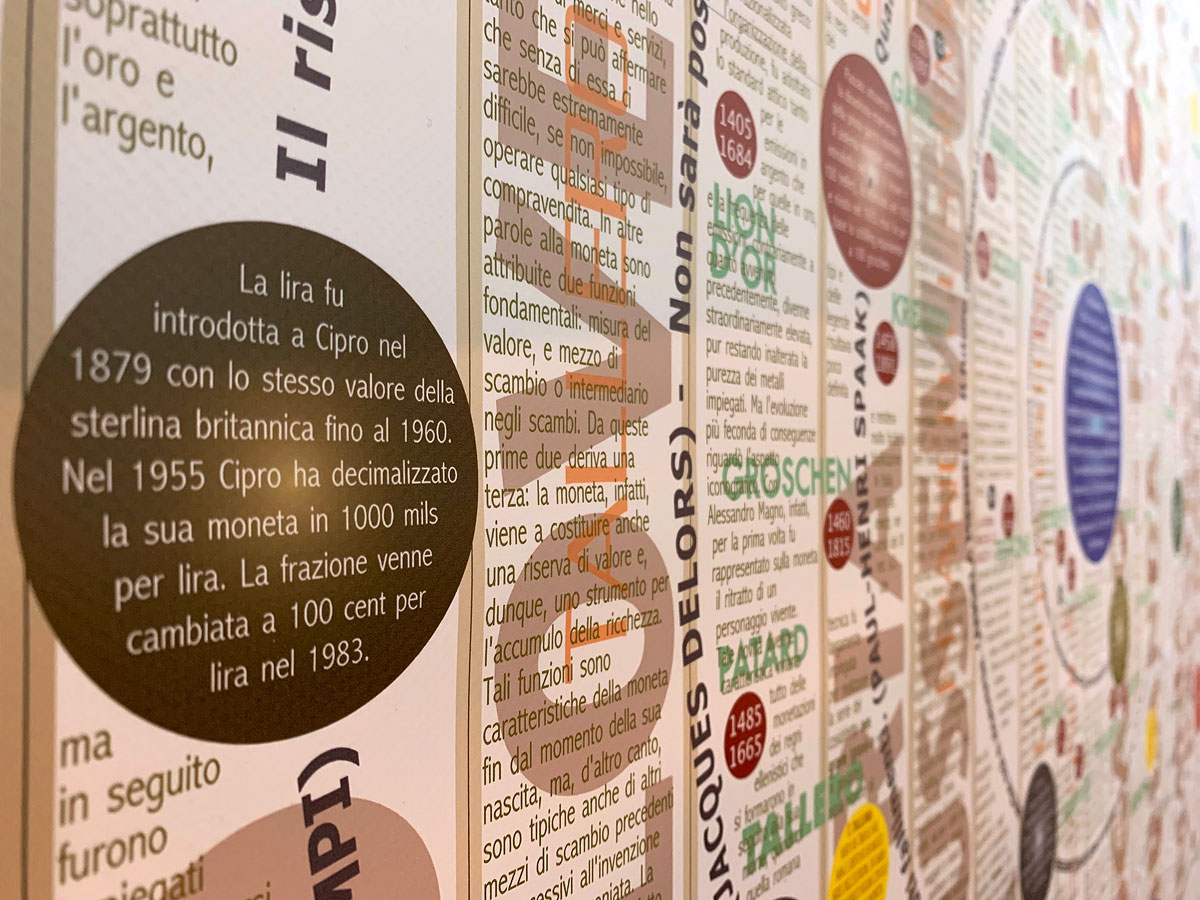
This map shows the birth and evolution of coinage in 48 stages starting with barter: coinage in antiquity and its function; the birth of the portrait from Alexander the Great to the Roman emperors; the reforms of Nero, Diocletian, and Constantine; the coinage of the barbarian kingdoms; Byzantine and Arab gold in the West; the monetary reform of Charlemagne; coinage of account, royal coinage, and devaluation; "coarse" silver coinage and the primacy of Venice.

DATA SHEET

EURO
Standard sizes
cm 100 x cm 100
cm 120 x cm 120
cm 140 x cm 140
Customized sizes are available on request.

AUTHOR: A great scholar from Mestre, at the time just a graduate student in numismatics, of whom we have lost track but that we would like to trace.

MADE IN COTTON OR PVC

"EURO" can be easily framed.

The return to gold coinage; the birth of finance, the Renaissance and the reappearance of the portrait; the discovery of America and the influx of precious metals; mechanization and the birth of paper money; Napoleon and the decimal system in Europe; the EMS, the ECU and the EURO; Maastricht.
The map is a jewel of digital craftsmanship where all the texts intersect perfectly.