INFERNO
Dante’s canticle

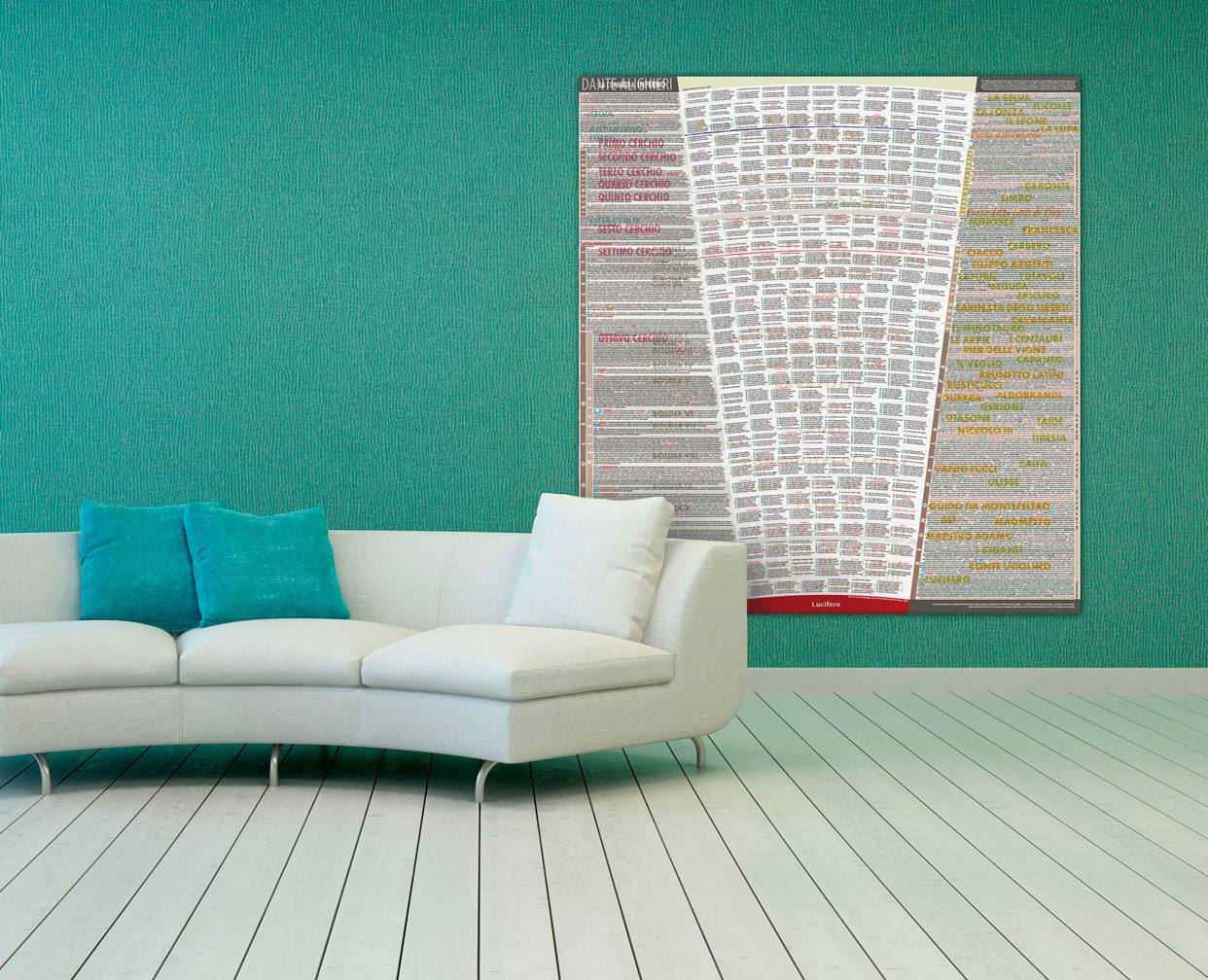
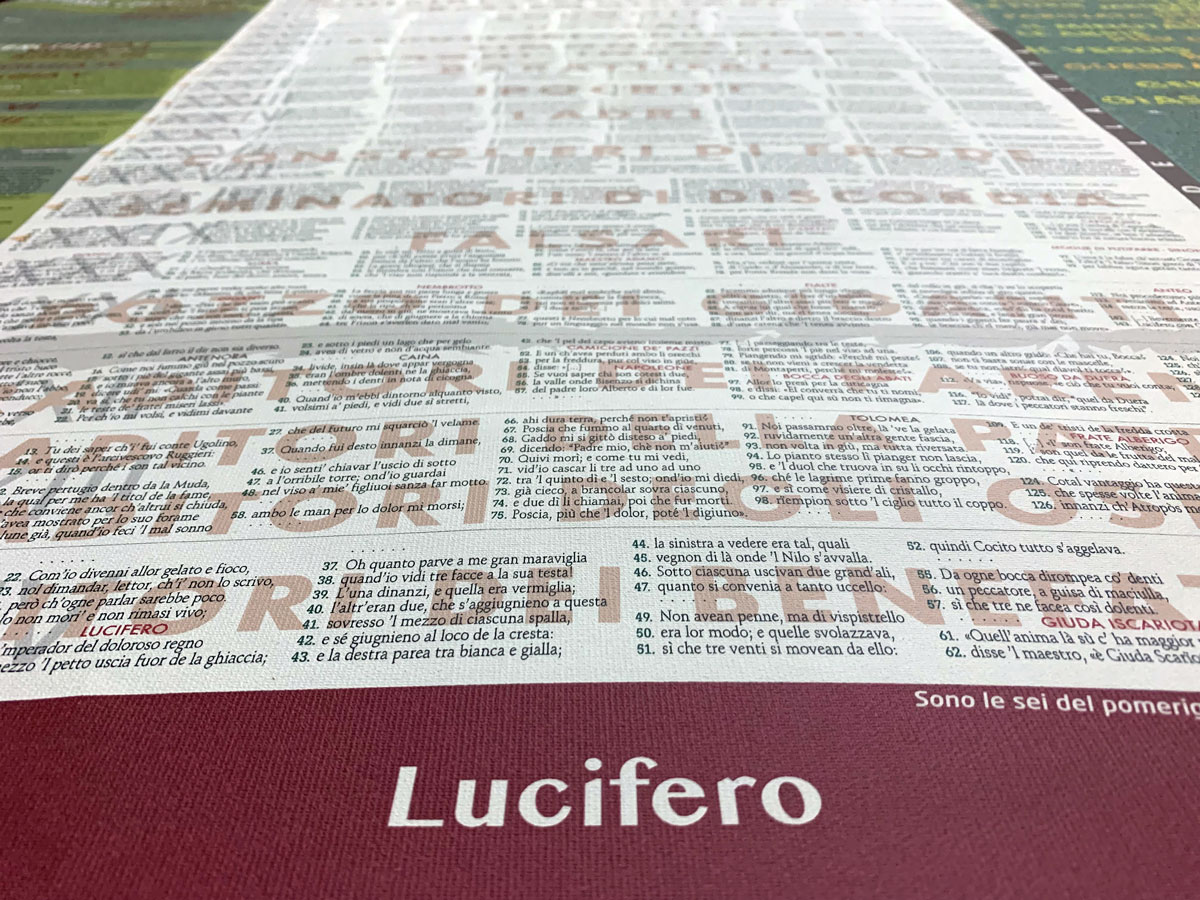
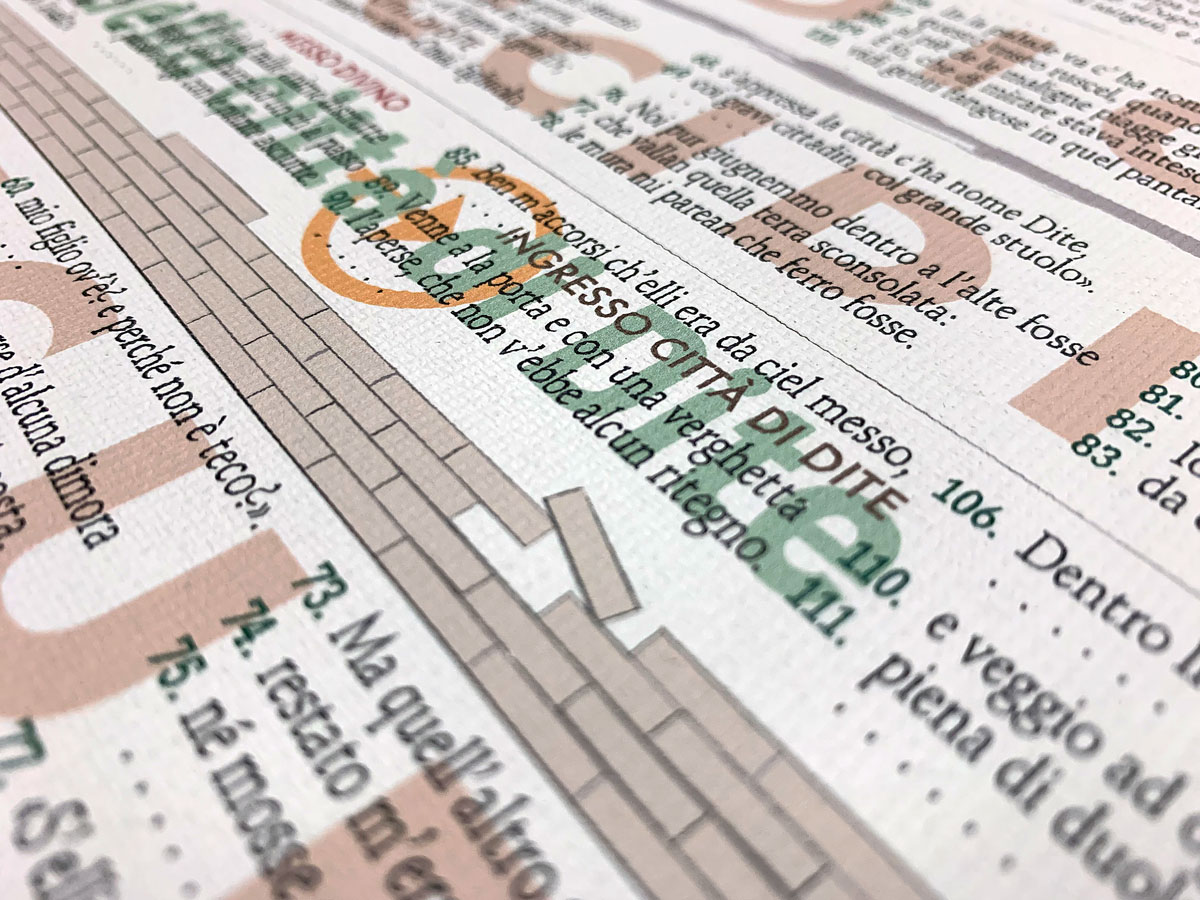
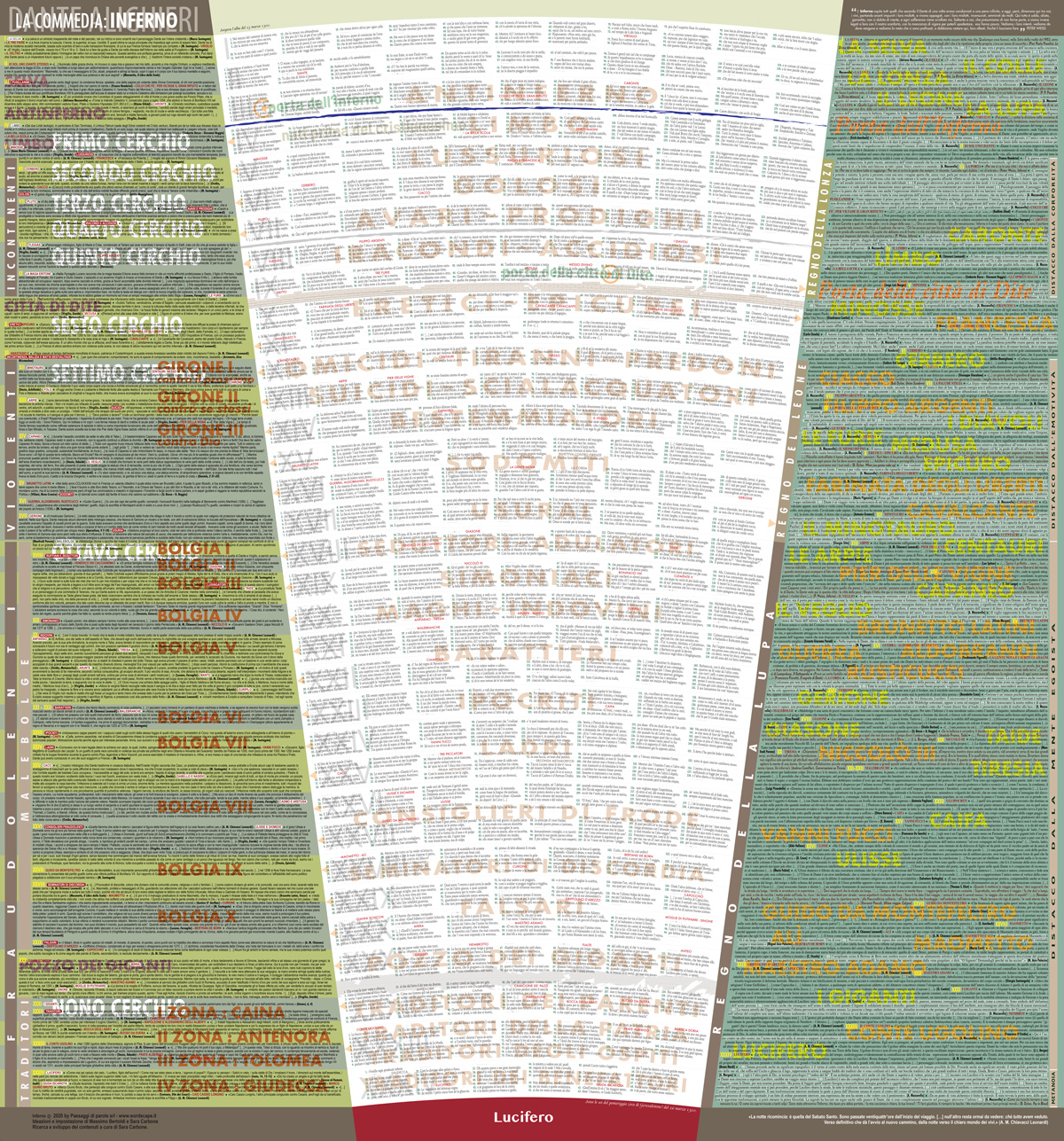
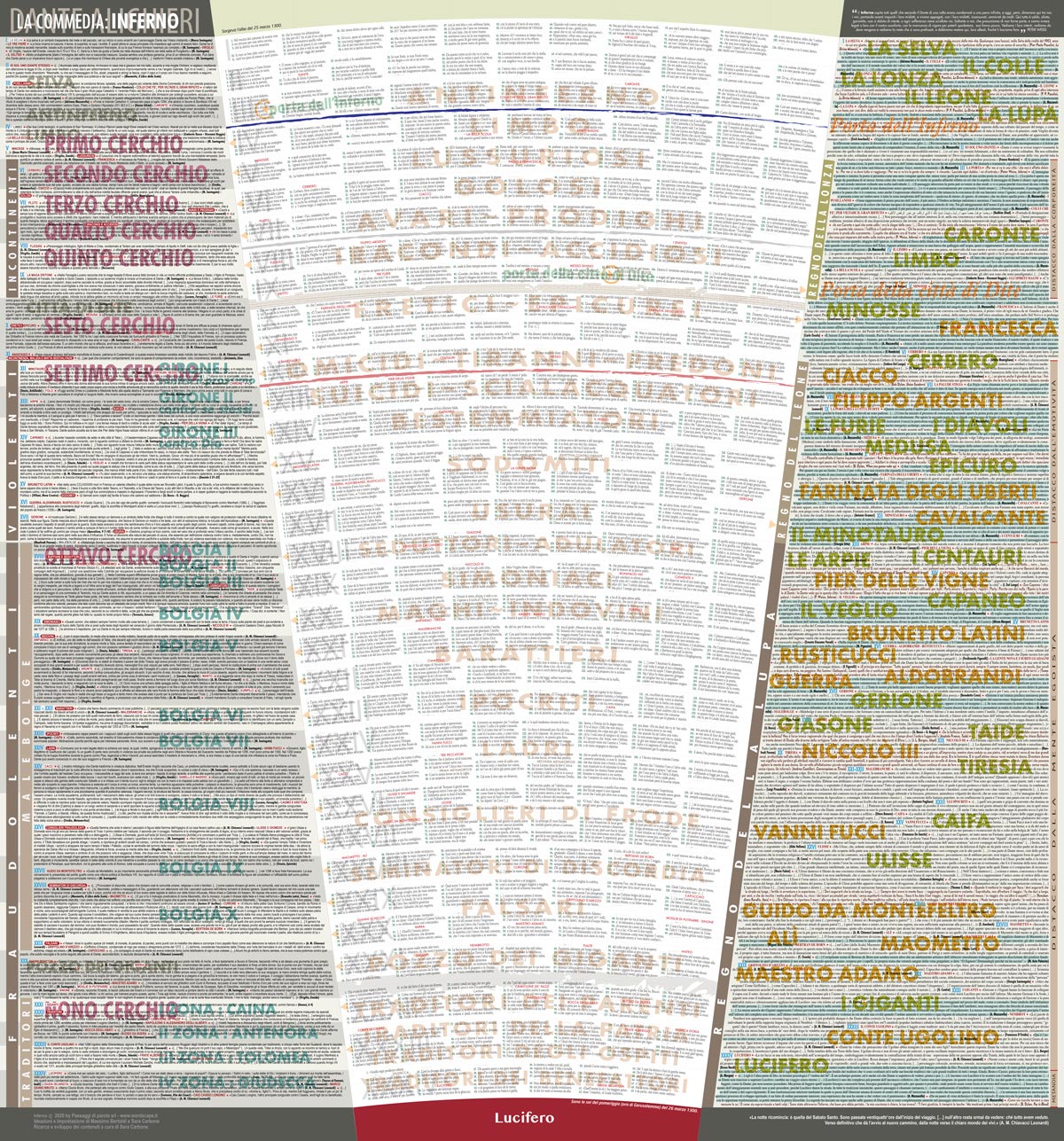
A tripartition of this map into vertical sections offers a dual reading path: vertical and horizontal. Central column The deliberately conical scheme represents the division by cantos. Few landscape references: two rivers, the Acheron and Phlegethon; the Cocytus; the walls of the City of Dis, and above all, two gates: the gate of Hell and the gate of the City of Dis. Arrows are visible at the left or right ends of the cone. They indicate the direction of Dante's path. The right represents consciousness, contemplation and spiritual quest. The left, the unconscious, guiding toward unconscious action. The “Inferno” cantica is stripped of all cosmological, astronomical, theological references. The selected verses are a continuous tale of encounters, and one can proceed in reading from one canticle to the next.

« The Inferno contains all those who, according to the Dante of old, were condemned to infinite punishment. Today, however, they dwell here among us, the living, continuing their offences unpunished, uncondemned, and admired by many. Here everything is solid, oiled, guaranteed; nothing is doubted, and all suffering is shaken off. It is only we who presume not to be part of them, yet we are bound to them by our despondency, our lack of strength to oust them because they are frightening. We see their intentions, where they come from, and their goal, yet we must remain here, their allies, as long as we let them. »

Peter Weiss | writer, playwright

Left column
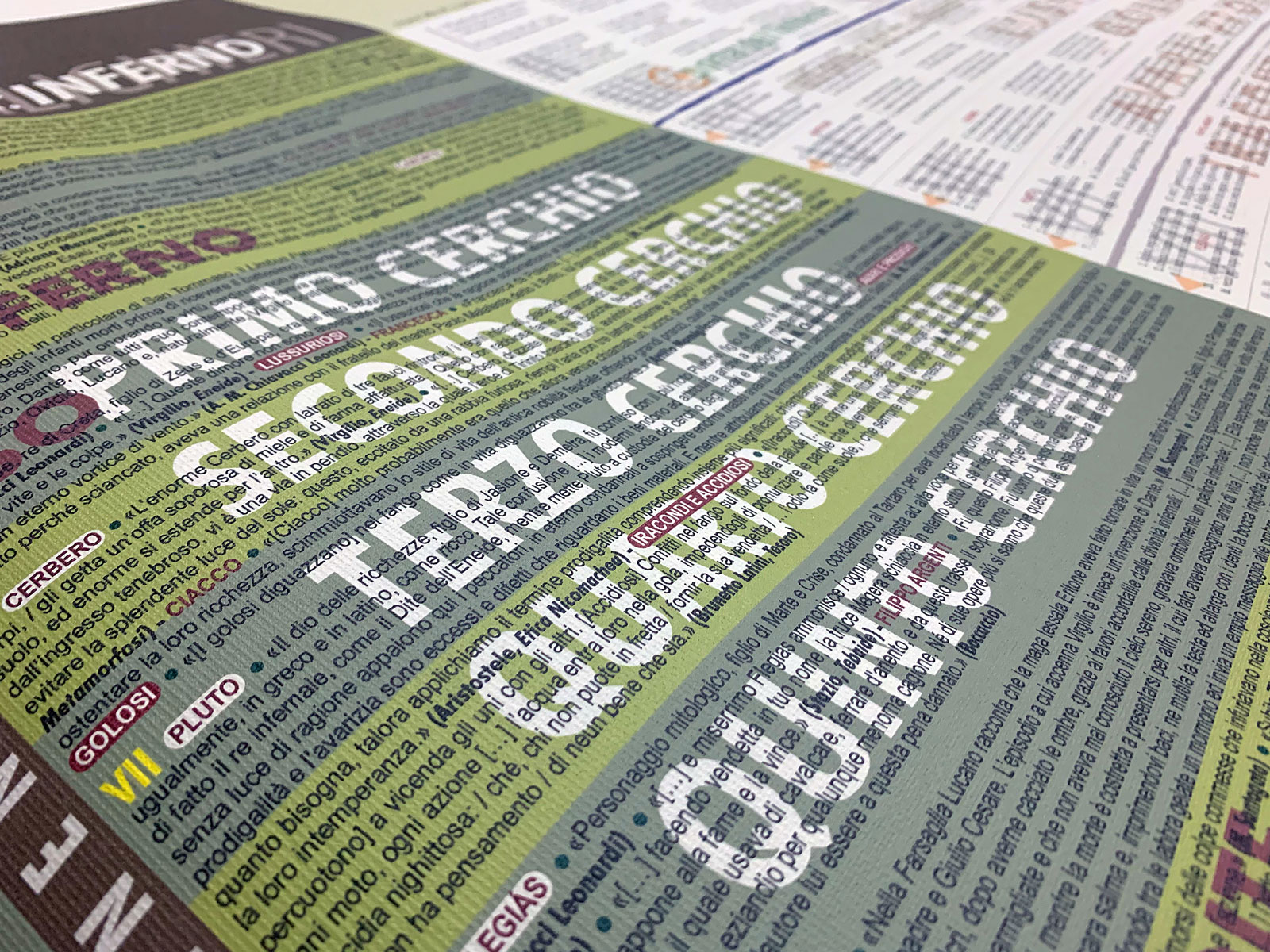
The idea is to keep the medieval Christian layout. The left column has horizontal bands that alternate two colors to indicate circles and bolge. The vertical bands placed on the far left indicate three deadly sins punished in the Hell: Incontinence, Violence, and Fraud. The vertical band of Fraud distinguishes Malebolge and Traitors.

Right column
An abstraction. An unbroken chain of twentieth-century texts. The idea behind: modern man cannot simply believe, but needs to understand. The quotations comes from those personalities who have tried to "understand" Dante's text. Literary critics, artists to whom Dante's text has served as a source of inspiration, scholars of contemporary theories. Among the artists: Pier Paolo Pasolini, Edgar Lee Master, Bob Dylan, Peter Weiss. Adriana Mazzarella, Giorgia Sitta and Mario Pigazzini among the major interpreters from a psychoanalytic and alchemical perspective. The voices are innumerable and also include some of the major foreign authorities: Auerbach, Pound, Borges. The only hint of an outline is suggested by Adriana Mazzarella's text, In Search of Beatrice.

DATA SHEET

“INFERNO“
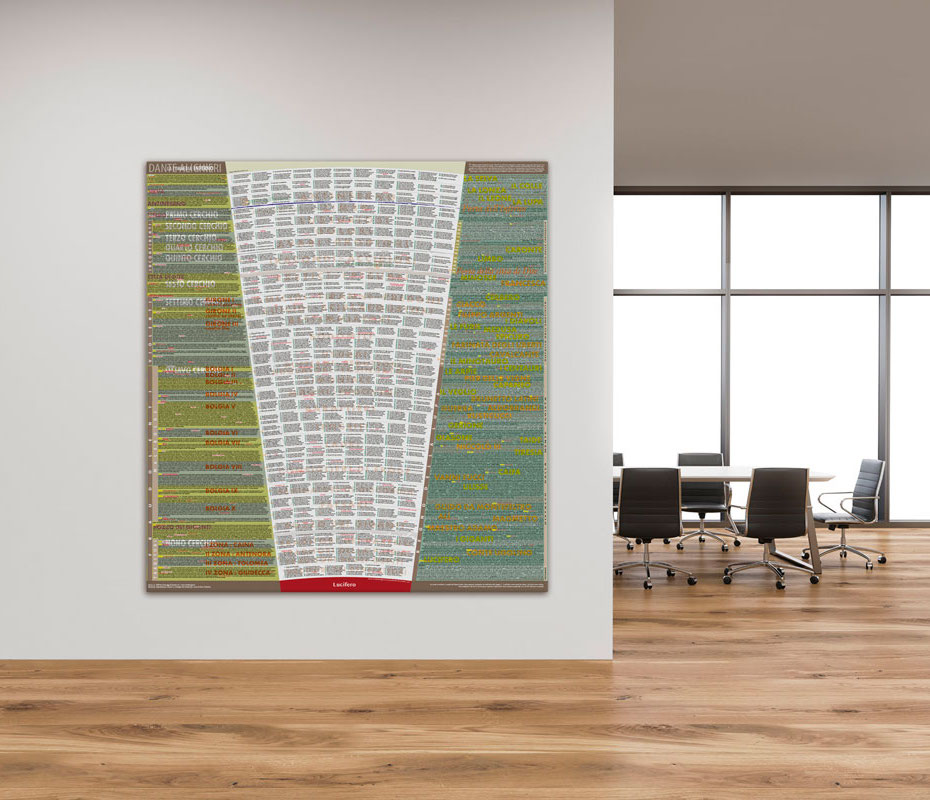
"INFERNO" Standard size cm 140 x cm 148

Two color versions available: 'OLIVE' and ‘DOVE GREY'.

AUTHOR: Sara Carbone.

MADE IN COTTON

“INFERNO” can be easily framed.

Write to a angela@paesaggidiparole.it if you want the full explanation of this work.

A re-reading of Dante according to the theories of Carl Gustav Jung. The vertical bands on the left of this column perfectly match those on the far left of the map. They identify the Realm of the Lonza, of the Lion and of the She-wolf. In the Jungian perspective they correspond to three of the stages of the human path: detachment from corporeality, detachment from emotionality, and detachment from the selfish mind. They are shown in the vertical band on the right of the column.
At the right bottom of this band: the Metanoia.
To go through Lucifer means to go through that stage that in Eastern religions is called metanoia, or change of intellect. A conversion. From what, to what? From the shadow of self to the clear world of the living.