ITALIAN RENAISSANCE

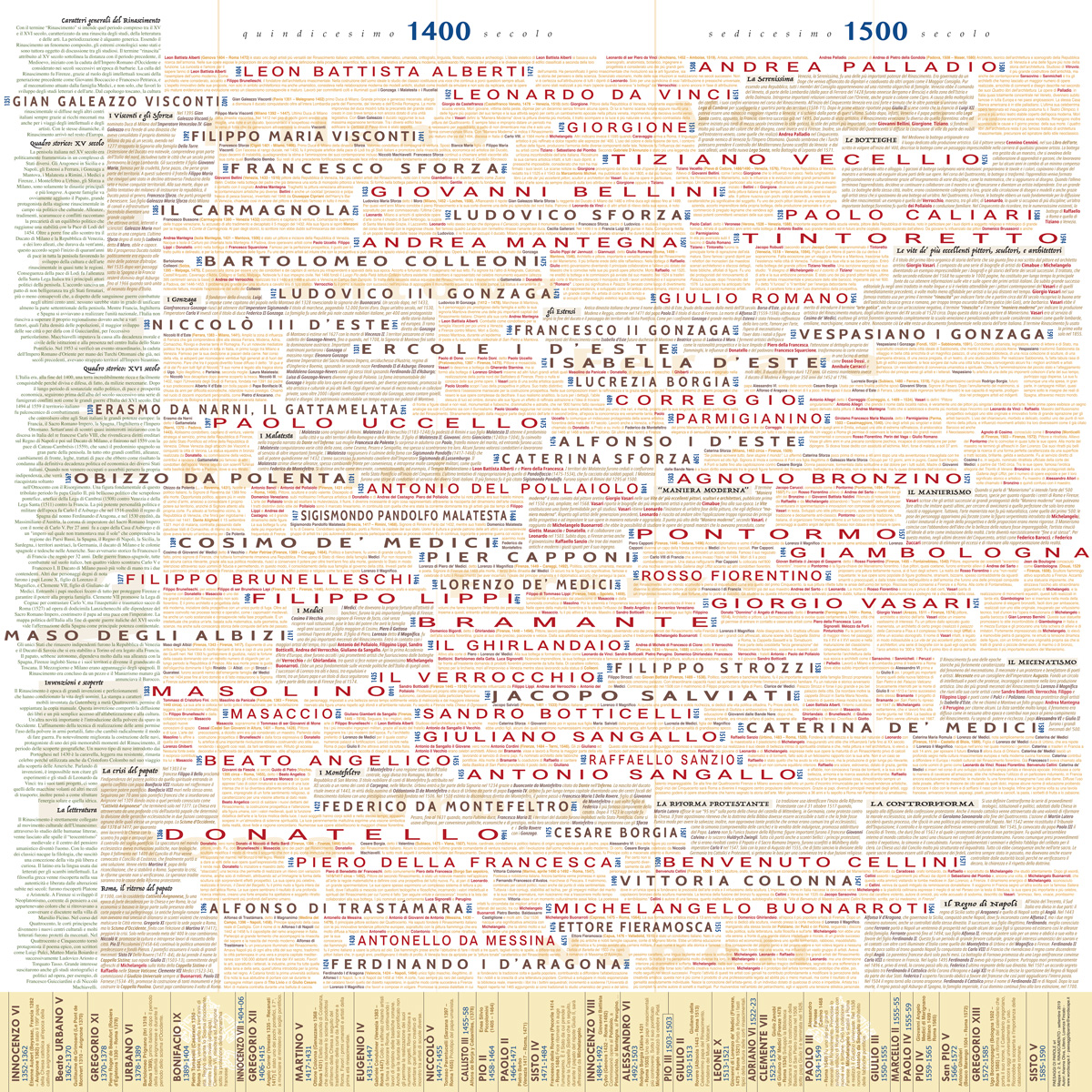
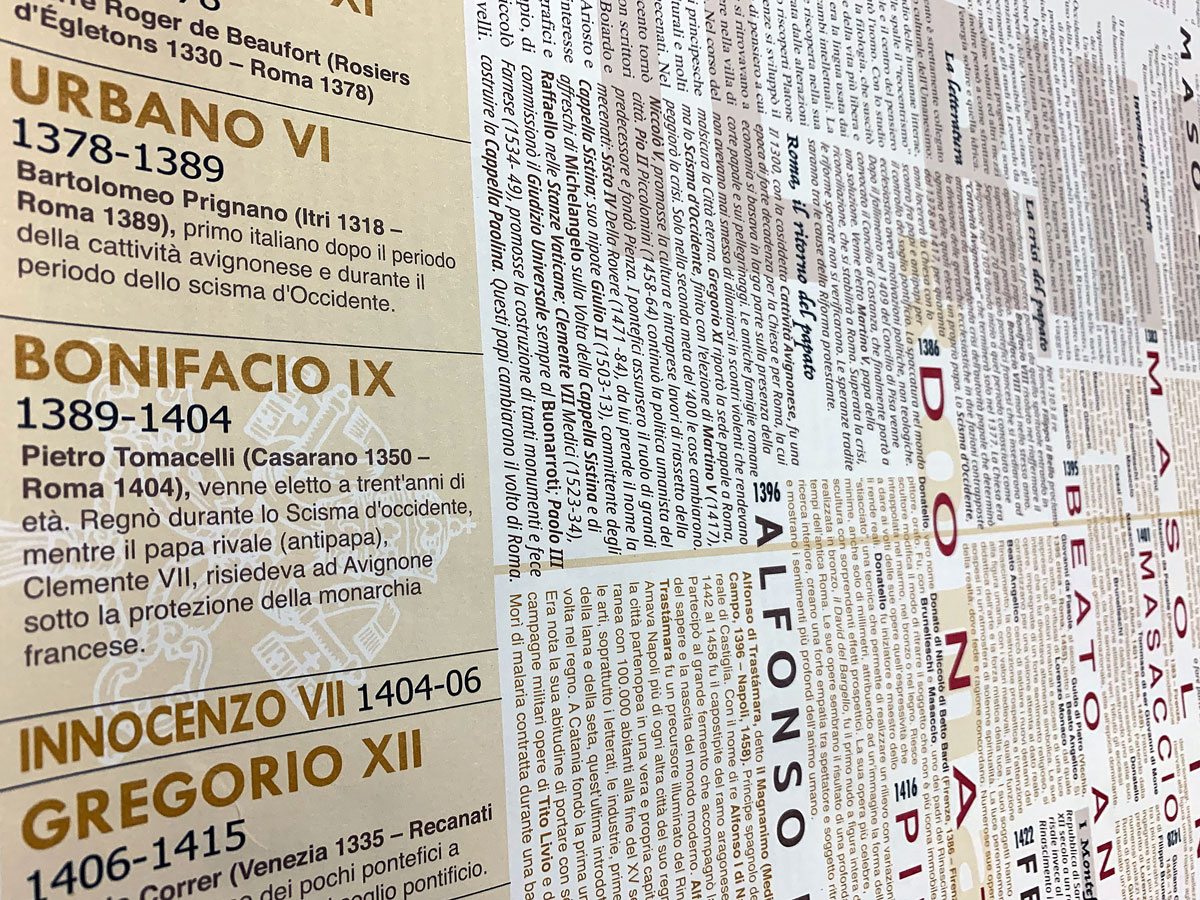
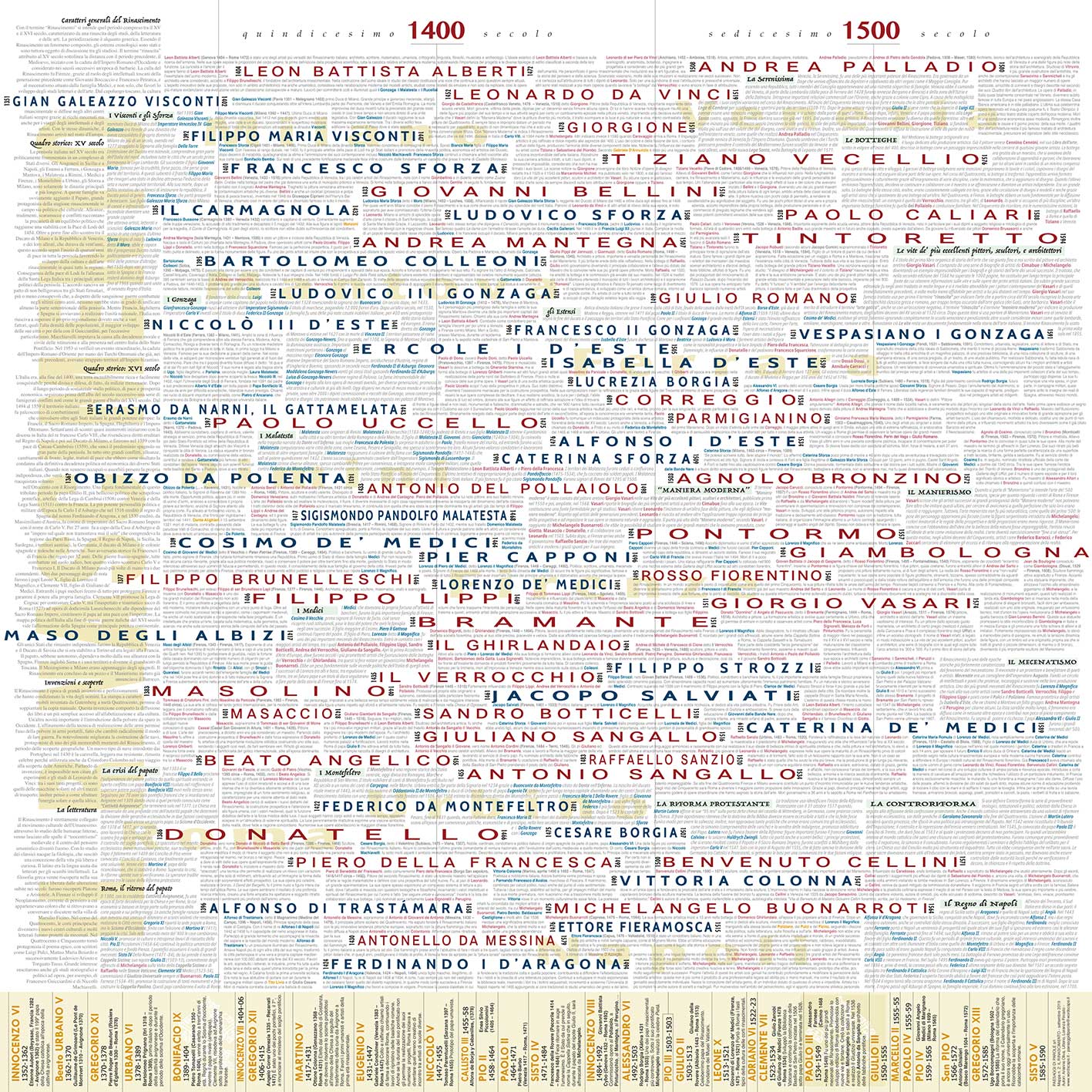
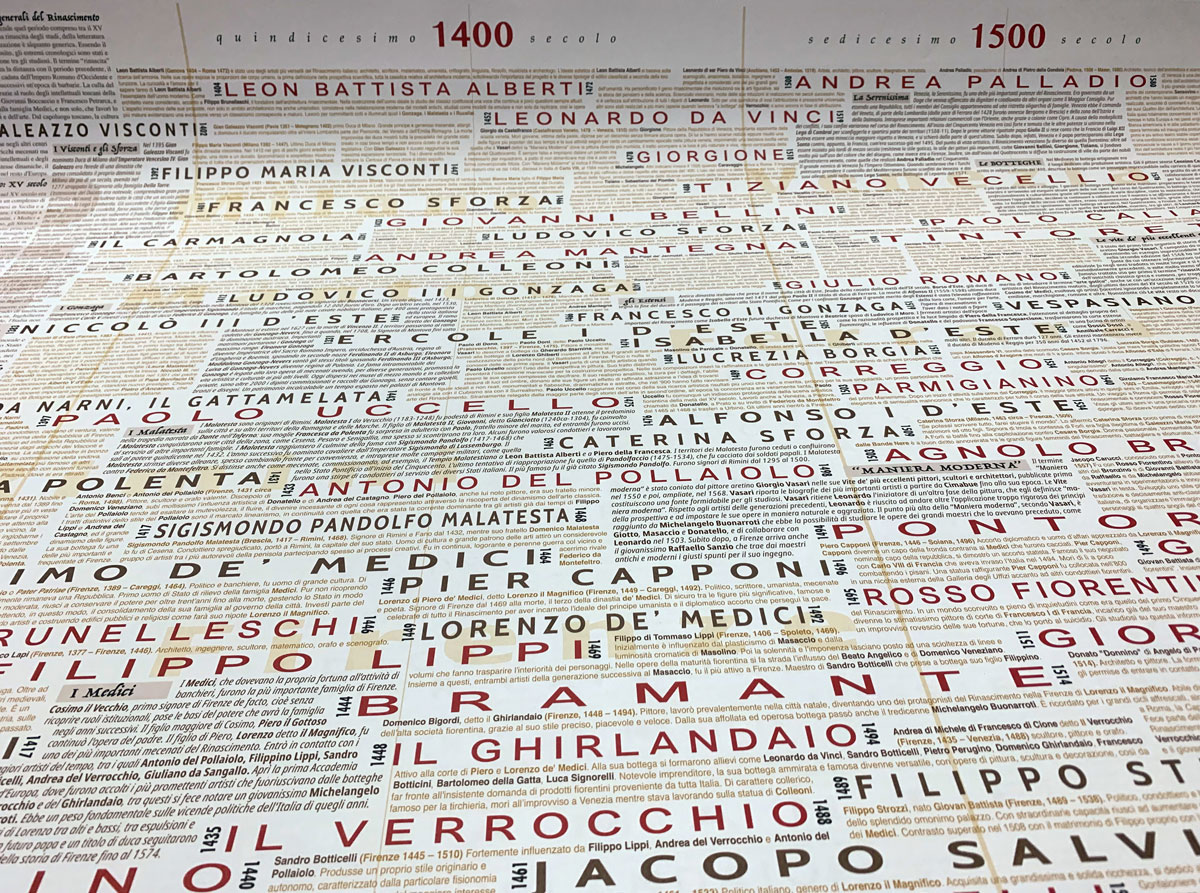
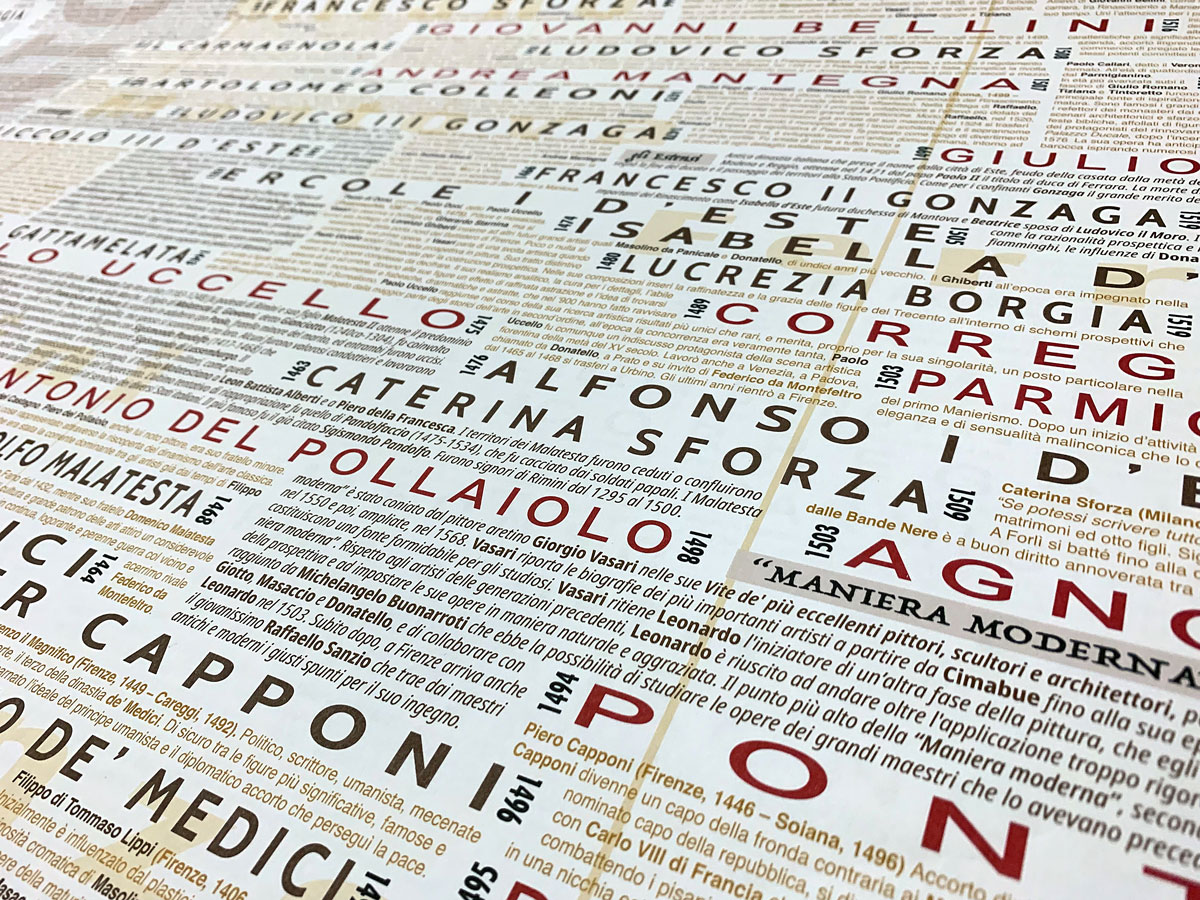
This is a chronological map. The timeline is one of the most used key to reading for our maps. It is used for HISTORY OF ITALIAN LITERATURE and HISTORY OF ROCK, where the timeline is a spiral.From 1350 to 1600, the name of each artist is graphically placed inside the date of birth and death. The length of the name of each artist, represents, a scale length of the artist’s life. In this way, it is graphically clear the chronological contemporaneity and sequence of all the authors.Who did live longer? Michelangelo or Bramante? Could Donatello have met Tiziano?This map answers visually to those questions and further more.
AVAILABLE IN ITALIAN LANGUAGE

« I do not find any difference between painting and sculpture except that the sculptor pursues his work with greater physical fatigue than the painter, and the painter pursues his work with greater mental fatigue.»

Leonardo da Vinci | scientist, inventor, artist
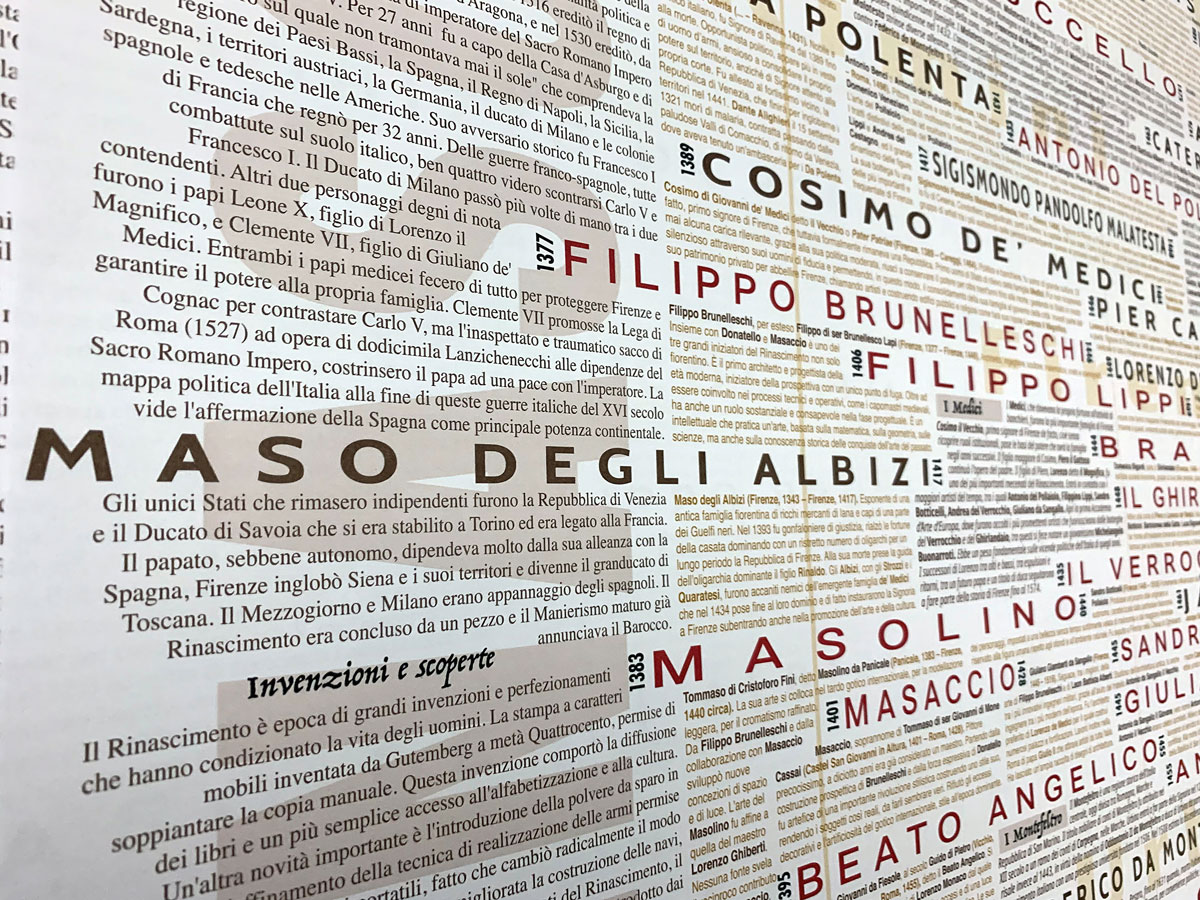
The term "Renaissance" refers to that period between the 15th and 16th centuries, marked by a revival of studies, literature and the arts. The chronological extremes of this period are still under discussion by academics. The cradle of the Renaissance was Florence, thanks to the role of Tuscan intellectuals of the previous generation such as Giovanni Boccaccio and Francesco Petrarch, and to the patronage of the Medici family and others, which fostered the development of literary studies and art. From the Tuscan capital, Renaissance culture spread to other Italian cities, again, thanks to wealthy patrons but also because of the travels of intellectuals and artists. With the same dynamics, the Renaissance spread in the rest of Europe.
DATA SHEET

"ITALIAN RENAISSANCE"
Standard size
cm 100 x cm 100
cm 110 x cm 110
cm 120 x cm 120
Customised sizes available.

Two versions available: a new color design (first picture) and the original design in a warmer color tone.

AUTHORS: Arianna Oliva e di Litterio.

MADE IN COTTON OR OVC

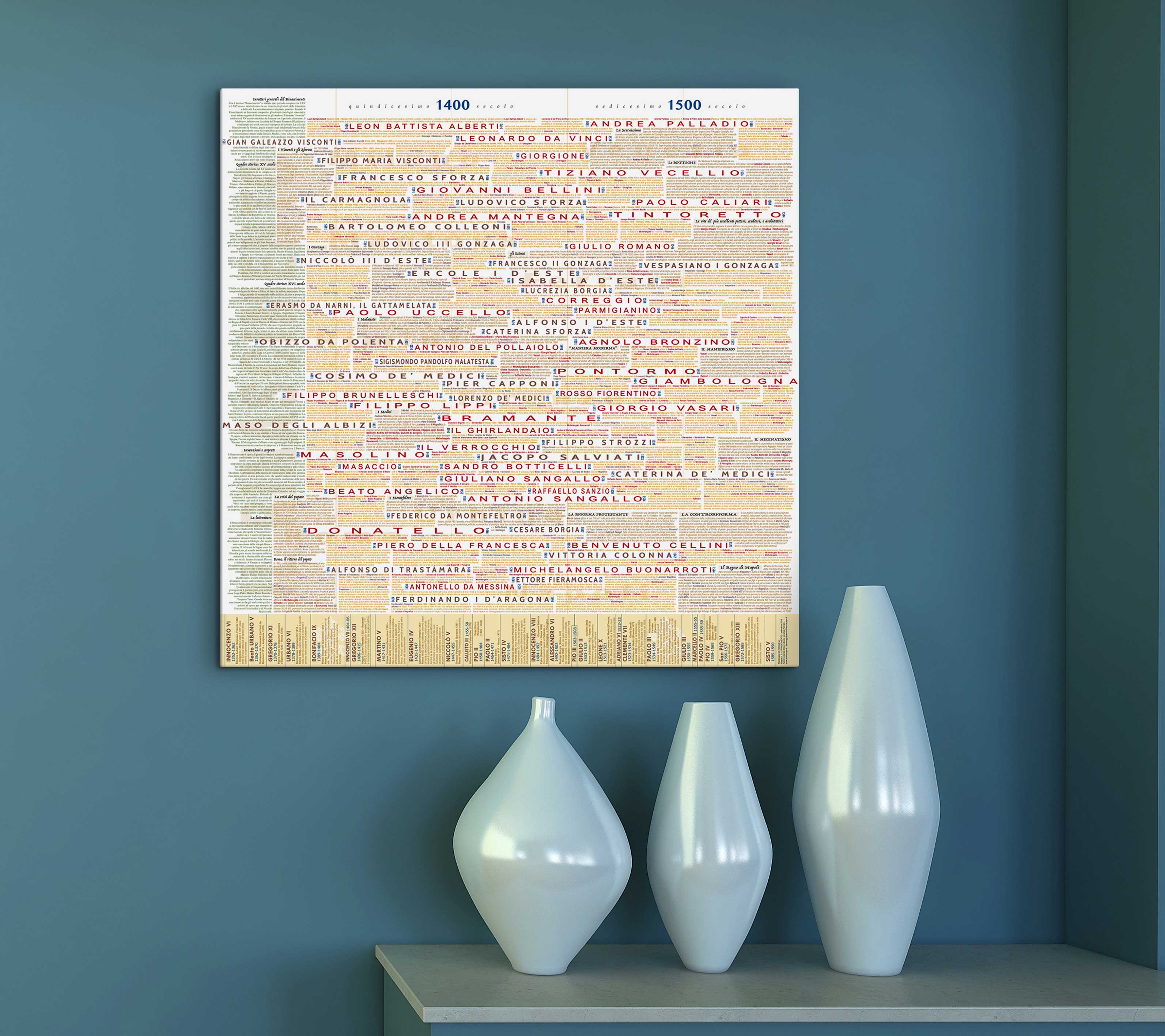
“ITALIAN RENAISSANCE“ can be easily framed.

The 15th century marked the final transition from the medieval age to the modern age. Italy was divided into a series of states, the strongest of which sought to extend their hegemony. The Peace of Lodi in 1454 ended a series of wars. A long period of peace throughout the peninsula began and it was interrupted by the arrival on the scene of the French king Charles VIII. This is an imaginary map of that time. At the top on the left there is the seigniory of Milan: first the Visconti, then the Sforza. On the right it is placed the Serenissima, the oldest State. Below, we can find the Gonzaga, dukes of Mantova and, on the right, the Estensi, dukes of Ferrara. The Malatesta, lords of Rimini, the Medici, and the Montefeltro come next. The papacy and the Kingdom of Naples close the map. These Signoria supported the great artists of the time and that unique cultural movement born in Italy, that the whole world envies us.